
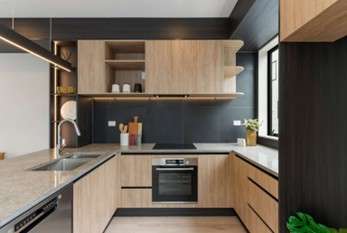
Which Kitchen Cabinet Finish Is Right for You?
The finish you choose for your cabinets sets the mood of the whole kitchen. It changes how light bounces around the room, how resilient your doors are to busy mornings, and how easy it is to keep everything looking sharp year after year. If you’re weighing up melamine, acrylic, or lacquer, you’re already asking the right question.
In Auckland, we see kitchens that need to work hard. Moist air after a winter boil-up. High UV in summer. Homes that shift from weekday quick meals to weekend entertaining without missing a beat. That’s why at Awesome Kitchens we put kitchen cabinets design and finishes at the centre of our design work, right alongside layout and appliances.
Founded in 2016 in Penrose and now based in Onehunga since 2020, our team has built a two-storey showroom to help you see, touch, and compare real doors under real lighting. With German machinery that keeps tolerances on point, we craft doors and panels that fit beautifully and last. Our in-house installation crews keep the process smooth from first sketch to the last handle fitted. That mix of design advice and production precision matters most when choosing a finish. Let’s break down each option with a clear eye on durability, maintenance, price, and style.
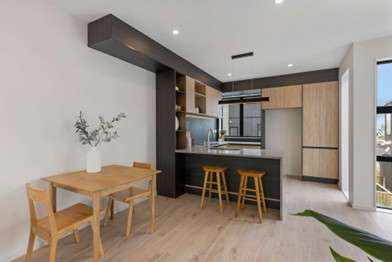
Why cabinet finish matters
Cabinet doors are the parts you grab, wipe, and look at every day. They take more direct use than benchtops for many households, so the finish choice directly affects your cleaning routine and how the kitchen feels to live with.
Light levels in Kiwi homes vary, and finish sheen changes how big or small a room reads. Deep gloss can widen sightlines. Soft matte can calm a busy space. Texture can hide fingerprints.
There’s the practical side too. Families might prefer a finish that shrugs off knocks. Serious home cooks often choose heat-friendly edges near ovens. Landlords aim for finishes that are robust and easy to refresh between tenants.
Getting this right saves money over time and helps your kitchen age well.
Melamine: the reliable workhorse
Melamine doors start with a substrate, usually moisture-resistant MDF or particleboard. A decorative paper layer is thermally fused to the board. The result is consistent, colour-stable, and widely available in woodgrains, plain colours, and modern textures. Local brands include Melteca, Prime Panels, Bestwood, and Laminex.
What we like: it’s very durable for the price. Melamine resists staining, offers good scratch tolerance, and is easy to wipe with a damp microfibre cloth. Modern textured surfaces hide smudges surprisingly well.
Edges are the key detail. Melamine doors are edged with matching tape, ideally applied using PUR glue on a high-spec edgebander. That adhesive is more water-resistant, which matters around sinks and dishwashers. Done right, the edge looks crisp and resists peel.
Melamine works best with flat or simply profiled doors, which suits contemporary and minimalist designs perfectly. The material’s layered construction means sharp impacts can occasionally mark edges, though replacement is straightforward and colour matching across batches is reliable. This makes melamine an excellent choice for kitchens where practicality and easy maintenance are priorities.
Melamine fits many projects: rentals, family kitchens, and fast timelines. It’s also an excellent partner for mixed-finish designs where melamine forms the base run and a statement island uses a different finish.
Acrylic: deep gloss and colour consistency
Acrylic fronts are either solid acrylic sheets or an acrylic layer laminated to a board. The headline feature is that piano-like gloss, with genuine depth and excellent colour uniformity. High-end matte acrylics are also available and include fingerprint-resistant options that cut down on daily wiping.
When you love crisp reflections and that gallery look, acrylic is hard to beat. It’s UV stable when sourced from quality suppliers like Senosan or StyleLite, keeping whites and colours true under New Zealand sun.
Edges again make the difference. Matching acrylic edgeband delivers a continuous look so doors read as a single plane. On well-made doors, joints are neat and durable.
Acrylic delivers excellent durability for everyday use. Like all high-gloss surfaces, dark colours may occasionally show fine marks in high-traffic areas. The advantage is that most surface marks can be polished out with appropriate care products, which we provide guidance on as part of your aftercare kit.
If you want a modern, reflective kitchen that feels spacious, acrylic earns its keep. Matte acrylic gives a more understated feel while keeping the same clean, flat geometry.
Lacquer: sculpted edges and infinite colour
Lacquered doors are typically MDF that’s primed, sanded, and sprayed with a 2-pack polyurethane system. The payoff is shape. You can have shaker frames, bevels, curved finger pulls, or integrated J-pull handles. If you have a colour in mind, you can match it. From Resene classics to custom mixes, the palette is effectively open.
Finish levels range from full gloss to dead matte. Satin sits in the sweet spot for many kitchens: it reflects enough light to lift the space without showing every fingerprint.
Lacquer offers excellent long-term performance when properly detailed. We apply a subtle radius to edges and corners during production, which enhances impact resistance while maintaining clean lines. Should any damage occur over the years, lacquered panels can be professionally repaired or refinished, giving your kitchen a renewed look without full replacement.
It takes more production time and skill to get a flawless lacquer result. There’s curing time too. The cost typically sits at the top end, which is why we see clients use lacquer on feature doors, appliance housings, or a standout island while pairing it with melamine on base cabinets.
Side-by-side comparison
Here’s a quick look at how the three stack up across key factors.
| Factor | Melamine | Acrylic | Lacquer (2-pack) |
| Look | Flat, consistent, wide texture range | Deep gloss or ultra-matte; strong colour depth | Any profile; any colour; multiple sheen levels |
| Edge detail | Taped edge; clean with PUR | Matching acrylic edge for a monolithic look | Sprayed edges; shaped profiles possible |
| Durability | Very good for daily wear | Excellent face durability; watch for fine swirls on dark gloss | Strong but corners need care; repairable |
| Maintenance | Wipe with microfibre; mild soap | Non-abrasive cleaners; occasional polishing for gloss | Gentle cleaners; touch-ups possible |
| Heat and moisture | Good, protect edges near ovens and sinks | Good face performance; manage appliance clearances | Very good once cured; allow proper ventilation |
| Repair options | Replace individual doors | Polish minor marks; replace if heavily damaged | Professional spot repair or respray |
| Price in NZ | Entry to mid | Mid to upper-mid | Upper |
| Best use | Full-kitchen economy, rentals, busy family spaces | Modern reflective kitchens, premium matte | Feature cabinetry, profiles, colour-led designs |
| Lead time | Short | Moderate | Longest |
How the right hardware and carcass support the finish
A cabinet door is only as good as the board and gear behind it. We recommend moisture-resistant MDF or particleboard for doors and carcasses, especially in coastal Auckland. The small premium pays off when a dishwasher steams open and real life happens.
Quality hinges and drawers matter just as much. We specify premium soft-close hardware that reduces door slam and edge damage. Ventilation cut-outs and heat shields near ovens protect finishes over time, whatever you choose.
This is where precision machinery comes in. Our German edgebanders use PUR glue and tight temperature control, which gives cleaner lines and stronger water resistance. CNC routing keeps finger pulls symmetrical and profiles sharp. When the foundation is right, the finish performs better.
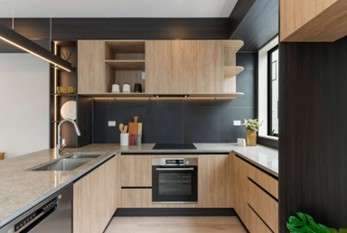
Care, cleaning, and small repairs
A finish you love is a finish you’ll look after. A few simple habits go a long way.
– Microfibre cloths for daily wipe-downs; mild dish soap for greasy spots
– Soft edges near sinks; don’t park wet tea towels on door tops
– Open dishwashers for a minute before pulling out drawers below
If something goes wrong, there are options. Melamine chips or lifting edges can often be repaired or replaced without fuss. Acrylic gloss can be cut and polished like a car finish in many cases. Lacquer can be touched up on site for small knocks, or panels can be resprayed to refresh a whole run.
Ask for an aftercare kit when you sign off your colours. We supply these with guidance so you’re set from day one.
Budget planning in New Zealand
Think bigger than just the door price. Accurate quoting should include the substrate grade, edge specification, hardware, and any protective work near heat or water. Sometimes changing the finish on only the highest-touch areas gives you the look you want without stretching the budget.
A popular approach to kitchen cabinets design is a layered scheme: melamine for carcasses and most doors, acrylic for high-impact gloss wall units, and a lacquered feature island in a bold colour. The room reads premium, and the costs stay smart.
Lead times vary by finish. If you’re planning around a benchtop template or appliance delivery, set your timeline early and pick a finish that fits it. Our team maps this out with you so there are no surprises.
Quick picks by lifestyle
Choosing between melamine, acrylic, and lacquer gets easier when you focus on how you live.
–Young family: Hardwearing melamine in a woodgrain texture; satin lacquer for the island if you want a statement
–Minimalist apartment: High-gloss acrylic uppers with matte acrylic lowers; handle-less rails to keep lines clean
–Classic villa: Shaker-profile lacquer in a soft satin; colour-matched panels and integrated fridge doors
–Rental refresh: Flat-panel melamine throughout; matching panels for a tidy, economical upgrade
–Coastal home: Moisture-resistant substrates with PUR edges; satin finishes to moderate glare and UV reflections
–Serious home cook: Lacquer near heat zones for shaped pulls; melamine or matte acrylic where wipe-downs are constant
Common quoting traps to avoid
Before you sign, scan the details. Small lines on a quote can hide big differences in finish quality.
-Missing edge-banding details
-No mention of substrate grade
-Vague hardware items
-Skipped ventilation notes near ovens
-Limited warranty clarity
-Thin panels on tall doors
-Spray process not specified for lacquer
Ask for exact product names, glue types, and hardware models. A clear quote protects your budget and your expectations.
Let’s create your ideal kitchen
Since 2016, Awesome Kitchens has been crafting kitchens that transcend mere functionality—they become spaces where families gather, memories are made, and everyday moments turn into something special.
Visit our two-storey showroom at 282 Neilson Street, Onehunga, where you can explore a variety of finishes and styles in person. Walk through real kitchens, open drawers, compare melamine, acrylic, and lacquer under natural light, and see how different finishes behave throughout the day.
Our dynamic team is celebrated for superior design and unwavering commitment to your satisfaction. With state-of-the-art German machinery and in-house installation, we ensure a seamless journey from your first conversation to the final reveal.
Whether you’re building new, renovating a villa, or refreshing a rental, let’s create a kitchen that tells your story—one of love, laughter, and shared memories.
Welcome to Awesome Kitchens, where dreams come to life.
